
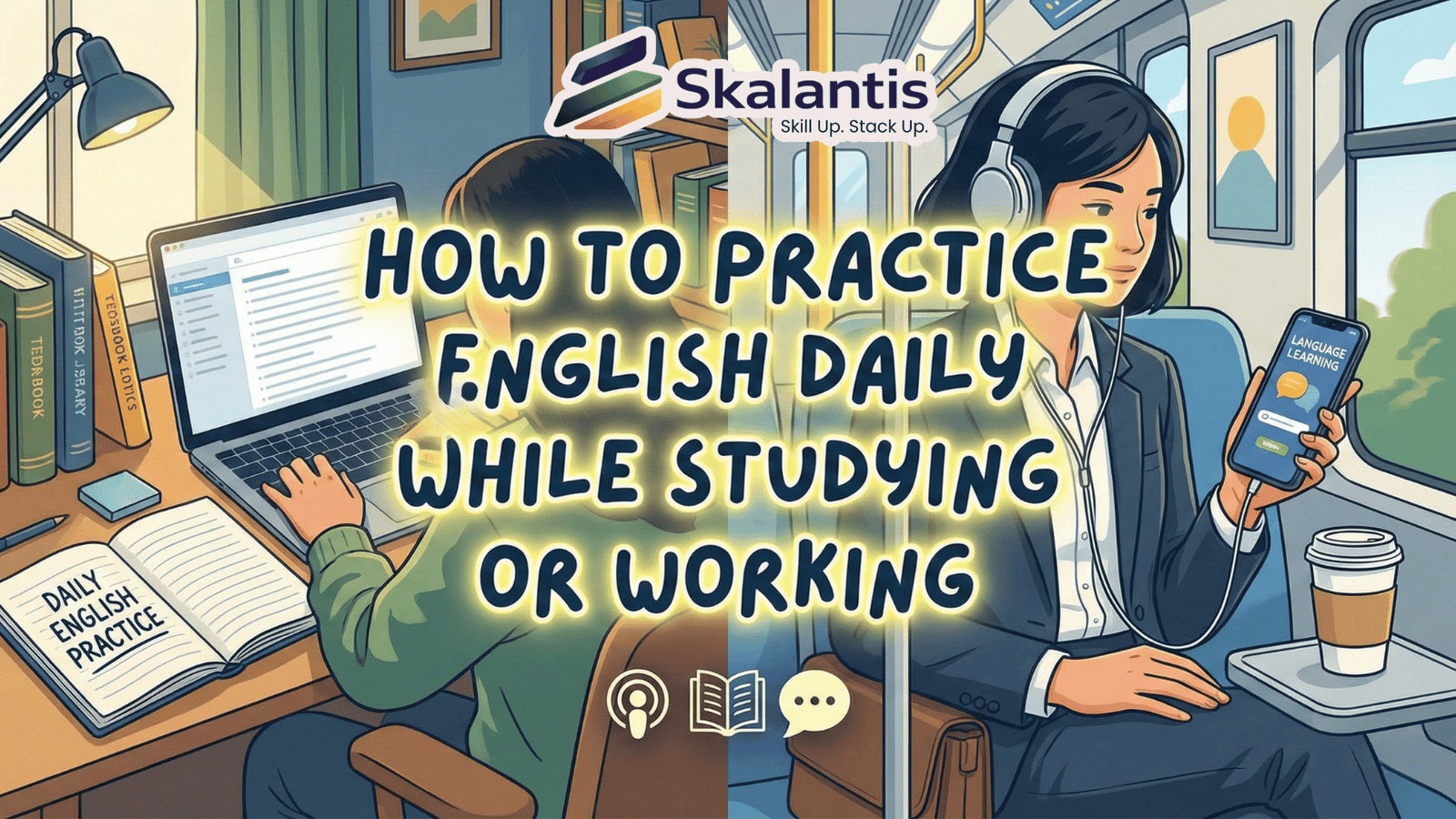
Improving your English does not require expensive classes or long study hours.
What matters is daily use in real situations.
If you are a student or a working professional, you already have limited time.
The goal is to build small habits that fit into your normal routine.
This guide shows simple ways to practice English daily while studying or working, without adding stress to your schedule.
Why Daily Practice Matters More Than Long Study Sessions
Many learners wait for free time to practice English.
That free time rarely comes.
Short daily practice works better because:
- It builds comfort with real usage
- It reduces fear of speaking
- It improves clarity over time
- It fits into busy routines
You do not need perfect grammar to communicate well.
You need clarity, confidence, and consistency.
Start With Simple Input Every Day
Input means what you listen to and read.
What you can do daily
- Listen to 10 minutes of English audio while traveling
- Read one short article or post in English
- Watch one short video in English with subtitles
How to choose content
- Pick topics you already like
- Avoid content that feels too academic
- Focus on clear, simple speakers
This builds natural understanding of tone, words, and flow.
Turn Your Daily Tasks Into English Practice
You do not need extra study time.
Use your existing tasks.
While studying
- Write short notes in English
- Summarize one topic in 3 simple lines
- Read instructions in English
While working
- Write your to-do list in English
- Draft short work updates in English
- Read one work-related article in English
This builds practical English, not classroom English.
Practice Speaking Without Needing a Partner
Many learners wait for someone to practice with.
You can start alone.
Solo speaking ideas
- Explain your day out loud in English
- Describe what you are working on
- Practice answering one interview question daily
You will feel awkward at first.
That is normal. Progress starts after discomfort.
Use Voice Notes for Daily Practice
Voice notes are underrated.
Simple habit
- Record a 60-second voice note in English
- Talk about your day or your goals
- Listen once and notice clarity, not mistakes
This improves fluency and confidence over time.
Build Workplace English, Not Book English
Global work needs practical English.
Focus on:
- Giving updates
- Asking for clarity
- Explaining delays
- Sharing progress
- Asking questions politely
Examples
- “I will share the update by tomorrow.”
- “Can you please clarify this point?”
- “I need one more day to finish this task.”
These lines matter more than advanced grammar.
Create a 15-Minute Daily English Routine
You do not need more.
Sample routine
- 5 minutes listening
- 5 minutes reading
- 5 minutes speaking
This is realistic and sustainable.
Consistency beats intensity.
Stop Chasing Fluency. Aim for Clarity.
Fluency is not sounding foreign.
Fluency is being understood.
Global teams care about:
- Clear communication
- Honest updates
- Reliable follow-through
- Calm tone
Accent is not a problem.
Unclear communication is.
Track Progress the Right Way
Do not track:
- Perfect grammar
- Native-like accent
Track:
- Comfort while speaking
- Ability to explain work
- Confidence in meetings
- Less fear of making mistakes
Progress feels slow at first.
Then it compounds.
Common Mistakes to Avoid
- Waiting to be perfect before speaking
- Memorizing long word lists
- Avoiding English in daily tasks
- Comparing yourself to fluent speakers
Your goal is daily progress, not instant fluency.
Final Thought
You do not need more time.
You need better habits.
Daily English practice works when it fits your life.
Start small. Stay consistent.
Clarity will improve with use.
If you are preparing for global roles, English is not about sounding smart.
It is about being understood and trusted.